
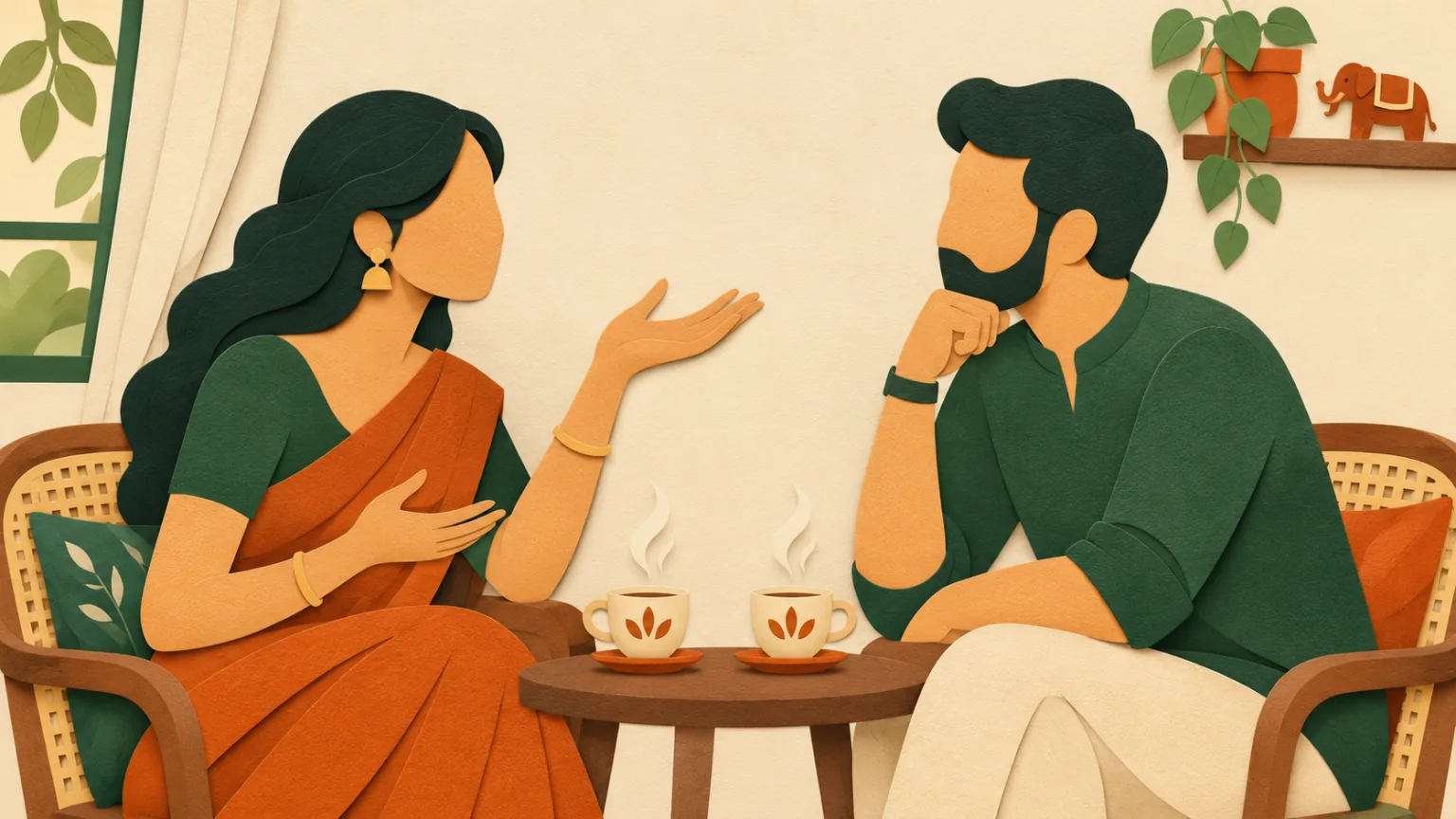
So, you found out your wife has PMOS, also known as PCOS. Her gynaecologist may have talked to her about her lifestyle or prescribed hormonal medication.
She might be scared and feel guilty, too. Maybe a conversation about weight brought back all the times she’s been made to feel ashamed of her body. Maybe she’s heard conflicting things about what a hormonal pill could mean for her fertility.
Honestly, it’s just too much!
Maybe it’s a lot for you, too. You want to support her but you don’t know how. Maybe you’ve asked her to come with you to the gym, but she hasn’t felt like it. She’s told you she’s exhausted. You’ve never felt anything quite like what she’s describing. It’s confusing!
I understand. The line between compassion and condescension is razor thin. Learning to walk it might be the most important skill you’ll develop.
First, the basics
Start with the everyday stuff: movement, food, rest and ways to manage stress. The international PCOS guideline recommends finding habits that fit her preferences and circumstances. There’s no single best diet or type of exercise for everyone with PCOS.
A walk that clears her head, a run she enjoys or lifting at the gym can all be ways to move. If she’d like help with food, plan a meal together or take a turn cooking. If she wants to get more sleep, ask what would make evenings easier. Everyone has their own way of managing stress. For one person it might be therapy. For another, a Bollywood night out.
As her partner, the best way to help might be to do it with her. If she wants to build a habit, ask if she’d like company and make time to show up.
So what happens tomorrow when you’ve got your shoes on and she says she’s too tired? Ask her if she still wants that nudge she asked for yesterday. Give her room to say, “Actually, today I’d like to sleep.” This isn’t the military. You can go to the gym together on Thursday.
Only the wearer knows where the shoe pinches
Listen. No, seriously, listen!
It’s easy to measure what she’s feeling against your own experience. If she tells you about a strange pain in her abdomen or says she’s exhausted even after sleeping, take her at her word. If she’d like help bringing it up with her doctor, offer to jot down what she wants to say or go along with her.
Advocate for her
After years of being told she’s exaggerating, she may play down how bad things are. If she wants you at the appointment, ask beforehand how she’d like you to help. If she tells the nurse the nausea was moderate, you can gently ask whether she wants to mention that it kept her up all night. Give her room to tell it in her own words.
Speak up around family, too. Maybe you grew up with cousins taking cheap shots at your height. She may have heard comments about the hair on her chin or her weight, even when she looked dazzling in her wedding dress. At the next family function, ask her what she’d like you to do if it happens. Sometimes a simple “Let’s leave her appearance out of it” is enough.
Some days support means going for that walk together. Some days it means letting her sleep and making the chai when she wakes up.
Conclusion
Research links loneliness to poorer health. Feeling lonely in the company of family isn’t much better. A partner’s support, empathy and effort can make all the difference in the world. The difference between perpetual struggle and thoughtful management. The difference between feeling defeated and feeling like a fighter. The difference between feeling like a diseased body and feeling like a human being with a full life.